
Germany by Motorhome
Germany is arguably the most motorhome-friendly country in Europe. Over 3,500 stellplatze, toll-free autobahns, fairy-tale castles on the Romantic Road, and the Rhine Valley are all just two and a half hours from the Dutch coast after the Hull ferry.
Germany by Motorhome - A Complete Guide
The Romantic Road runs 350 kilometres from Wurzburg to Fussen through medieval walled towns, baroque churches, rolling farmland and Alpine foothills, ending at the gates of Neuschwanstein Castle with the Bavarian Alps rising behind it. It is one of the great European motorhome routes, and it is just the beginning of what Germany offers. With over 3,500 dedicated stellplatze, toll-free autobahns, and roads that are a pleasure to drive, motorhome hire to Germany from our Pontefract depot puts you in one of the most motorhome-friendly countries in Europe. The German border is just two and a half hours from the Dutch coast, making this one of the easiest continental trips from Yorkshire.
Getting to Germany from Yorkshire
The overnight P&O ferry from Hull to Rotterdam makes motorhome hire to Germany straightforward. Disembark at Europoort in the morning and you are at the German border within two and a half hours on the Dutch and German motorway network. The Rhine Valley - Germany's western gateway and one of its finest touring regions - is within comfortable reach on your first day. Alternatively, the Eurotunnel from Folkestone to Calais puts you around four hours from the German border via Belgium. A week gives you time to cover one region well. Two weeks lets you combine the Rhine with Bavaria or Berlin.
The Rhine Valley and the Black Forest
The Middle Rhine between Koblenz and Mainz is a UNESCO World Heritage Site and one of the most celebrated river landscapes in Europe. The river flows past terraced vineyards, medieval castles perched on rocky crags, and the legendary Loreley rock. The towns along both banks - Bacharach, St Goar, Boppard - are strung with half-timbered houses and connected by ferries that cross in minutes. Stellplatze line the river, many with direct views of the water and the vineyards rising above.
The Black Forest in the south-west is a landscape of dense coniferous woodland, deep valleys and traditional villages. The Schwarzwaldhochstrasse runs along the ridge from Baden-Baden to Freudenstadt, with panoramic views across to the Vosges Mountains in France. Freiburg, the unofficial capital of the Black Forest, is a sunny university city with a Gothic minster and a busy market square. Cuckoo clocks originated here, and workshops in Triberg and Furtwangen still produce them by hand.
The Romantic Road, Bavaria and the Alps
Rothenburg ob der Tauber, roughly halfway along the Romantic Road, is a perfectly preserved medieval walled town with cobbled streets and towers that look like they belong in a fairy tale. Nordlingen, further south, sits inside the crater of a 14-million-year-old meteorite impact. The route ends at Fussen, in the shadow of Neuschwanstein Castle - built by King Ludwig II and the inspiration for the Disney castle. Stellplatze are positioned at convenient intervals along the entire road.
The Bavarian Alps rise dramatically south of Munich, with peaks reaching over 2,900 metres at the Zugspitze - Germany's highest mountain. Garmisch-Partenkirchen, at its foot, has mountain railways, hiking trails from gentle valley walks to serious Alpine routes, and the Partnach Gorge - a narrow limestone canyon with a path carved into the cliff face. A brilliant day for families or active couples.
Munich and Berlin
Munich is a city of grand architecture, outstanding museums, and a beer culture that reaches its peak during Oktoberfest each September. The Marienplatz, with its mechanical clock performing daily at eleven, is the heart of the old town. The Deutsches Museum on an island in the Isar is the largest science and technology museum in the world. Campingplatz Thalkirchen, set in parkland beside the river, has around 300 motorhome pitches with U-Bahn connections into the centre - the most convenient base for the city. It closes from November to mid-March, so plan a winter visit around this.
Berlin, in the north-east, is Europe's most dynamic capital. The Brandenburg Gate, the East Side Gallery, the Holocaust Memorial, and the Reichstag with its glass dome tell the story of a city shaped by the twentieth century. The cultural scene spans world-class opera, contemporary art and a nightlife of global reputation. Berlin is a longer drive from the western border, so plan it as a specific destination rather than an add-on if time is short.
Stellplatze, Landvergnugen and Staying Overnight
The German stellplatz system is the backbone of motorhome touring. Over 3,500 stellplatze range from basic parking areas with a single service point to fully equipped sites with electricity, water, waste disposal, showers and wifi. Most charge between 5 and 15 euros per night - considerably cheaper than formal campsites. They operate first-come, first-served, usually with a ticket machine or pay-by-envelope system. The Bordatlas guide and stellplatz.info are the best resources for finding them.
Landvergnugen is a German motorhome stopover scheme similar to France Passion or Brit Stops. An annual membership gives access to farms, vineyards and small businesses offering free overnight parking - in return, you buy some produce, eat at their restaurant, or taste their wine. It is a wonderful way to meet local producers and experience rural Germany beyond the tourist routes.
German law permits a single overnight stop on public land as a "restoration of fitness to drive" for up to 10 hours, provided you show no camping behaviour - no awnings, chairs or levelling ramps outside the vehicle. For proper stays, always use a stellplatz or campsite.
Your Motorhome for Germany
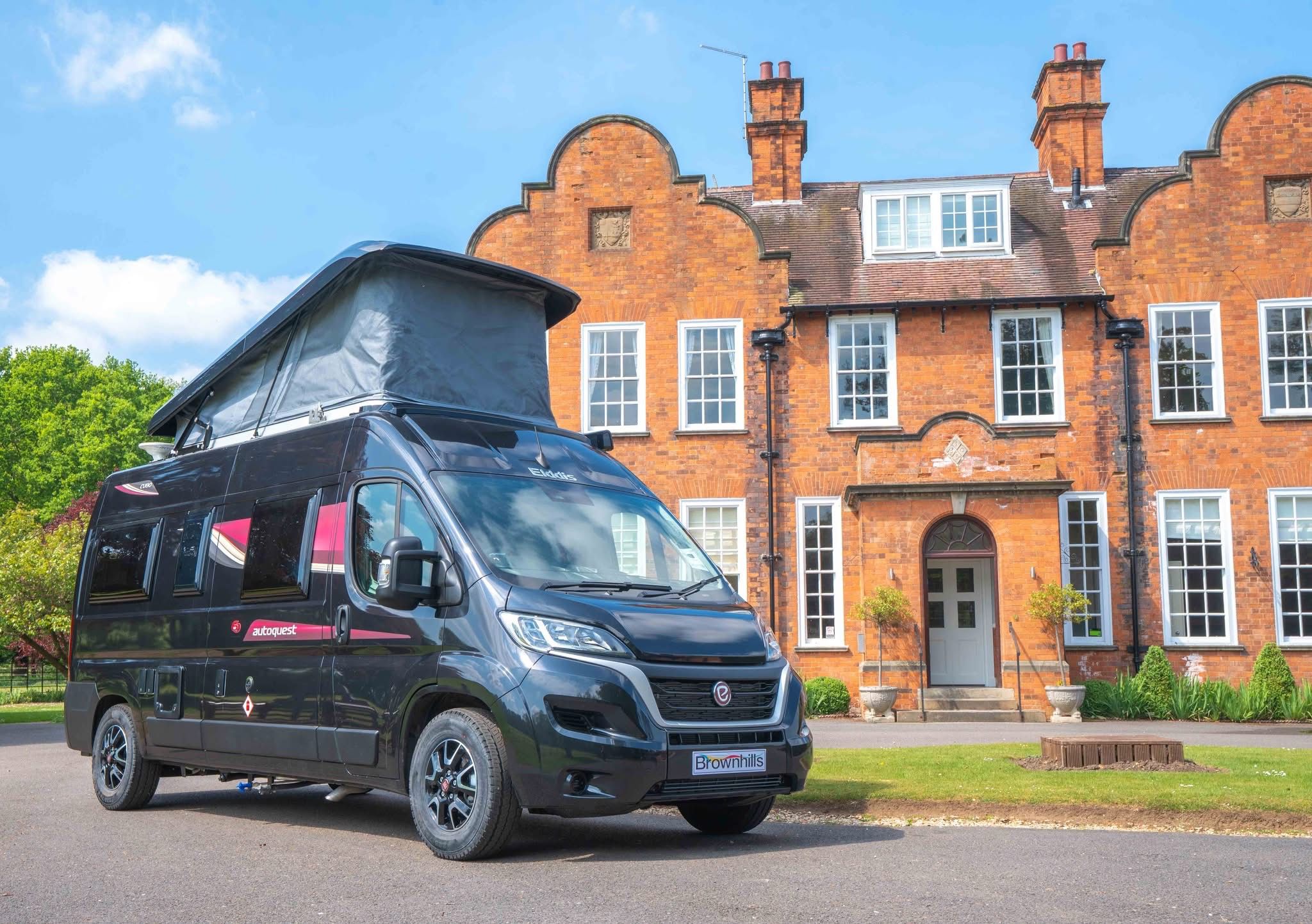
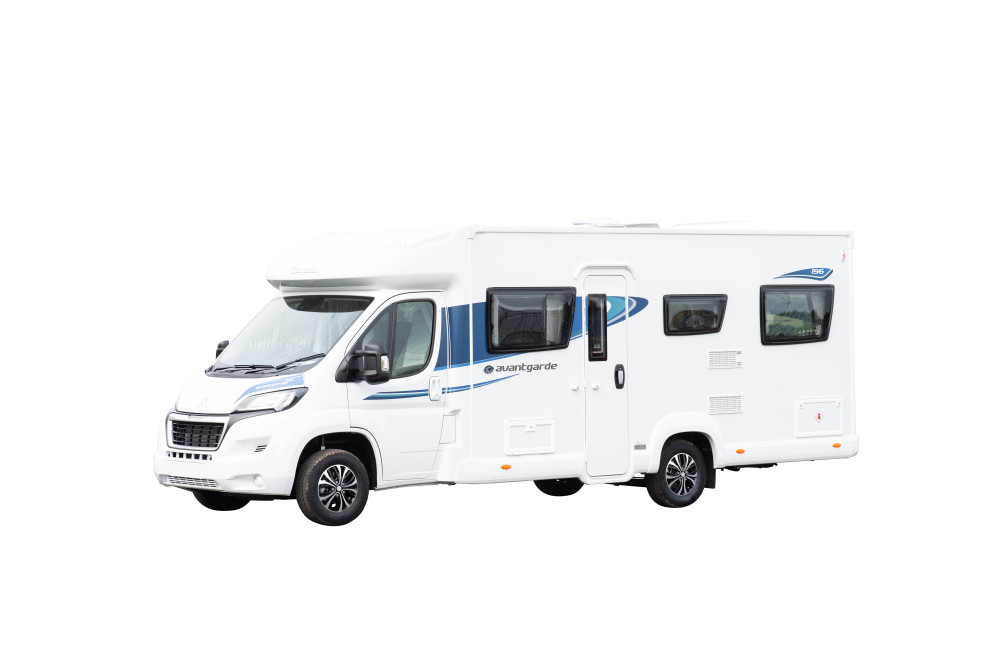
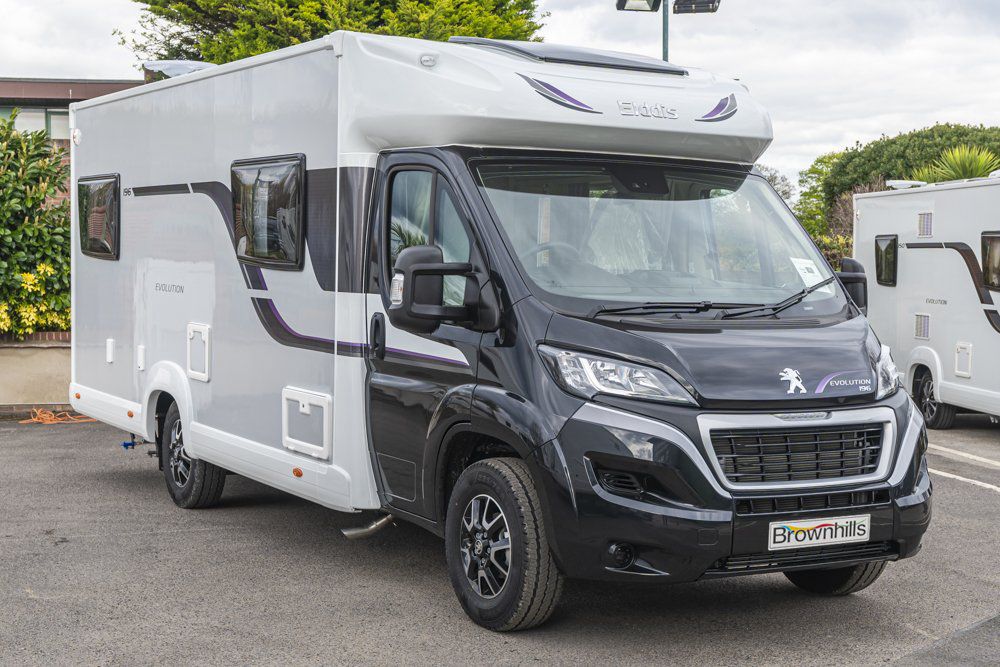
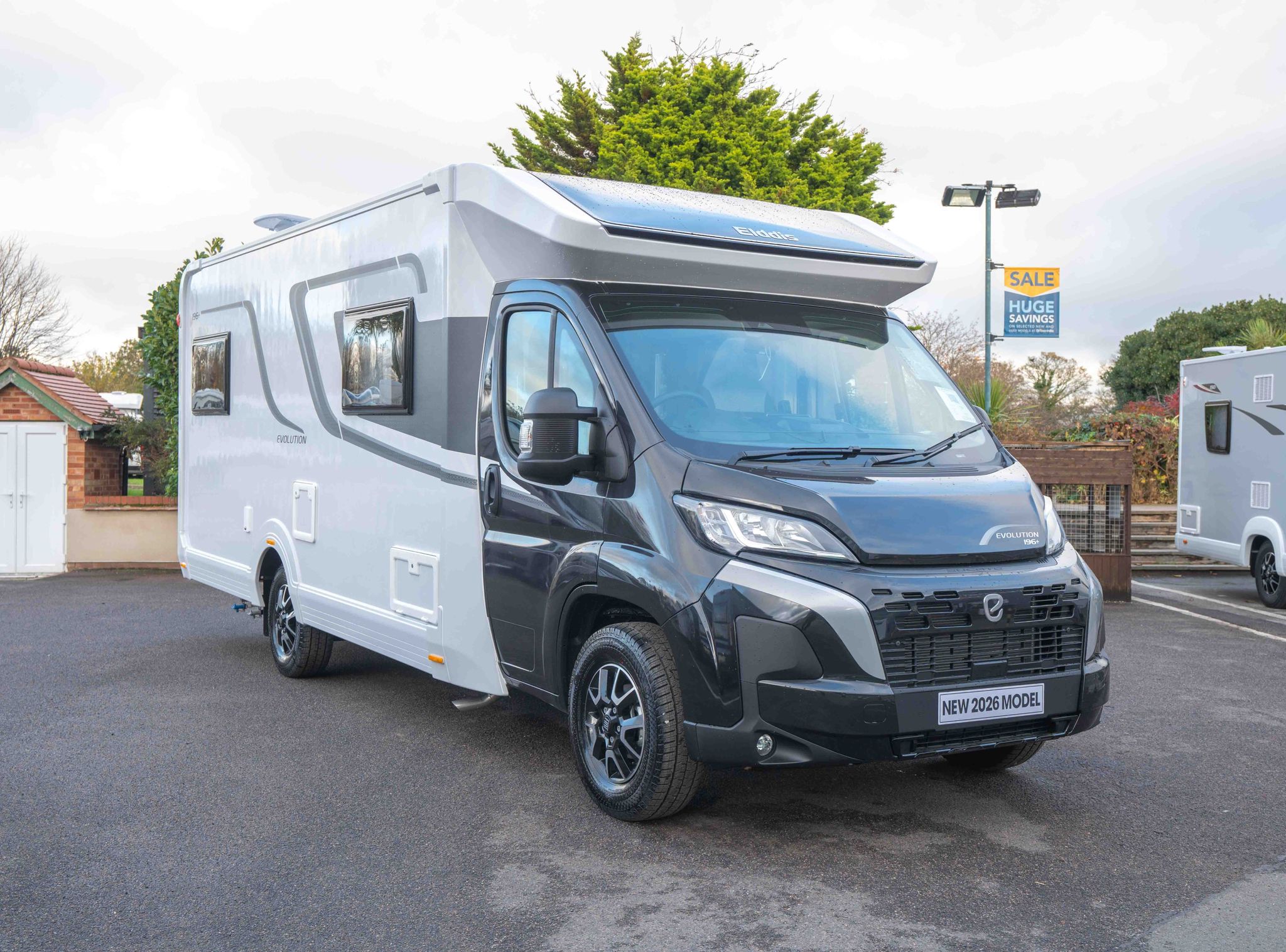
Our fleet includes 2-berth, 4-berth and 6-berth Elddis motorhomes with both manual and automatic options. Couples touring the Rhine and the Romantic Road often choose the compact 2-berth Autoquest CV80, while families heading to Bavaria prefer the space of a 4 or 6-berth Evolution. Several vehicles are dog-friendly. Prices start from 135 pounds per night, and every motorhome hire to Germany booking includes full European insurance and 24/7 roadside assistance.
German autobahns are toll-free for vehicles under 7.5 tonnes, which includes our entire fleet. The recommended speed on unrestricted sections is 130 km/h, though many sections have posted limits. Outside towns the limit is 100 km/h, and 50 km/h in built-up areas. You will need an Umweltplakette (environmental sticker) to enter low emission zones in cities including Berlin, Munich, Cologne, Stuttgart and Hamburg - order one online before you travel for around 15 euros. For a full packing list, our motorhome packing checklist covers what you need.
Germany connects naturally with the Netherlands - the obvious first or last stop via the Hull-Rotterdam ferry. Christmas markets in Nuremberg, Cologne, Dresden and Stuttgart make a winter motorhome trip particularly rewarding. For broader European route ideas, see our guide to European motorhome holidays.
From Pontefract, a motorhome holiday in Germany offers outstanding infrastructure, magnificent scenery, and a culture that genuinely welcomes touring vehicles. The stellplatz network alone makes it one of the easiest and most affordable European countries to tour.
Germany in Pictures
Perfect for Your Adventure
Choose from our carefully selected collection of modern motorhomes and campervans
Common Questions About Germany
Plan Your German Motorhome Adventure
Browse our premium fleet of motorhomes and start planning your perfect adventure.